Welcome to the website for BradworthySurgery
Hello and welcome to our website. We’ve packed it full of useful information in a very easy to use format with the added benefit of several online functions.
If you’re new to the area, have a look at our opening times, download a registration form and come and see us.
Our 2026 training afternoon dates can be found below.
This is essential to maintain high-quality up-to-date healthcare services for our patients. :
- Thursday 19th March 2026 (Completed)
- Tuesday 19th May 2026 (Completed)
- Wednesday 17th June 2026 (Completed)
- Wednesday 16th September 2026
The surgery will close at 1pm on these dates, and a full out-of-hours service will take over for urgent medical concerns. Please phone the usual practice number to be advised and directed.
Whilst our surgery is closed, for life threatening emergencies call 999.
For urgent medical advice call your usual practice number so you can be directed.
Our on-site pharmacy will be CLOSED during the staff training afternoon.
Find out what's going on in our latest newsletter ⬇️
Summer newsletter 2026
News & Health Articles:
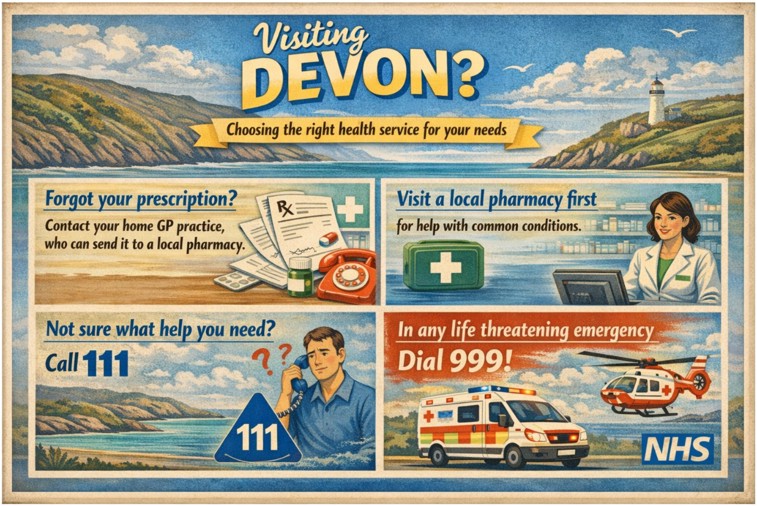
NHS Devon remind visitors and residents to plan ahead during the holidays
Residents and visitors are being reminded to plan for their healthcare needs ahead of the upcoming bank holiday and half term holidays.
With thousands of people expected to visit the county over the long weekend and school break, NHS Devon are encouraging everyone to make sure they know which service is right for their needs, to order repeat prescriptions in plenty of time and keep a well-stocked medicine cabinet at home for minor illnesses and injuries.
To read more please visit ⬇️
NHS Royal Devon | NHS Devon remind visitors and residents to plan ahead this half term
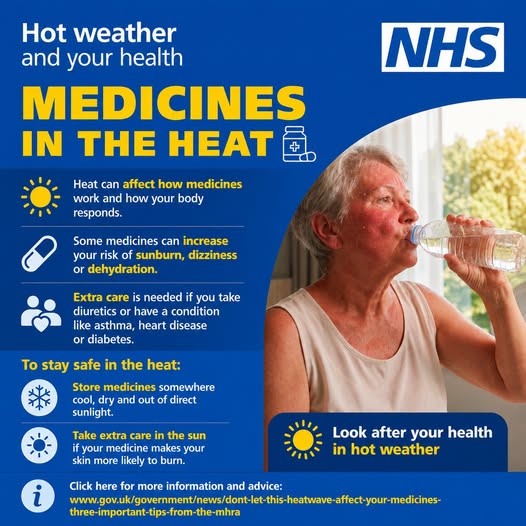
The UK has experienced scorching temperatures so far this summer. The Medicines and Healthcare products Regulatory Agency (MHRA) is reminding people that these hot conditions can affect medicines and how well they work.
Hot weather changes how your body responds to medications, which could impact people managing long-term conditions – but a few simple steps can help avoid problems.
Alison Cave, Chief Safety Officer at the MHRA, said:
“Let’s face it – when there’s a heatwave, most of us are focused on getting outside and enjoying it while it lasts. But it’s easy to forget that medicines left in the heat – in cars, bags, or on sunny windowsills – might not work properly when you need them.
“Some medicines can also make you more likely to burn in the sun, feel dizzy, or get dehydrated, especially if you’re taking diuretics or have a condition like asthma, heart disease, or diabetes.
“To stay safe in the heat:
- Store medicines somewhere cool, dry and out of direct sunlight – especially if you’re out and about
- Know the signs of heat-related illness – stay hydrated and listen to your body
- Take extra care in the sun if your medicine makes your skin more likely to burn
“And remember, for all medicines it’s important to read the leaflet and speak to a healthcare professional if you have any questions.”
To read more information please visit ⬇️
Don’t let this heatwave affect your medicines: Three important tips from the MHRA - GOV.UK
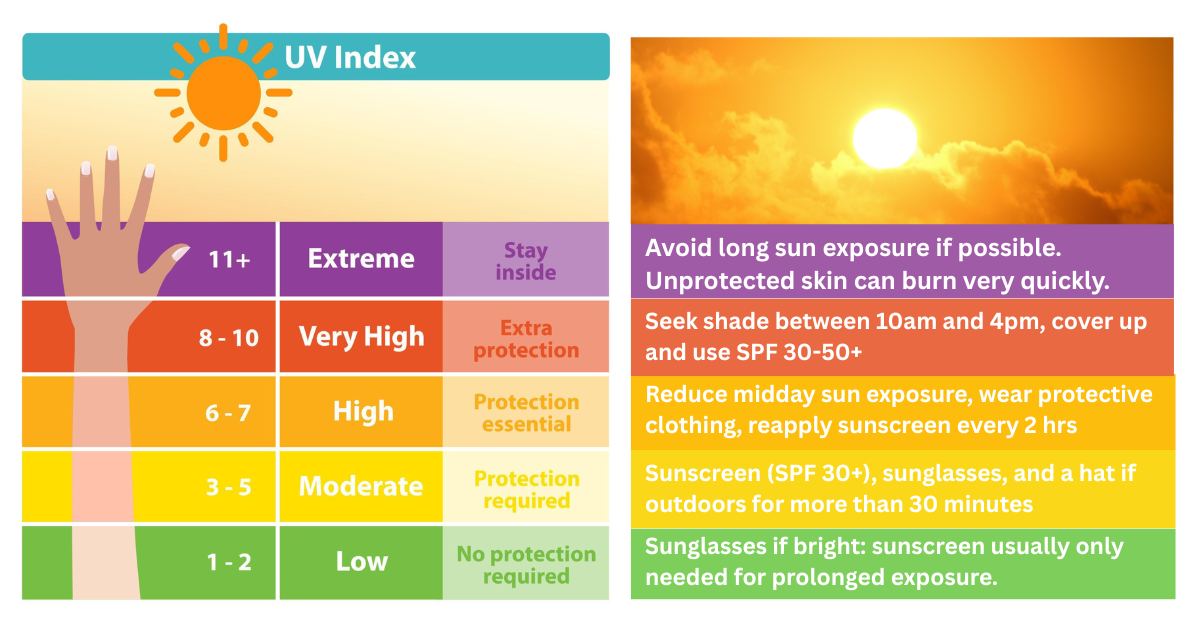
Understanding UV Levels
The UV Index (UVI) is a measure of the strength of the sun's ultraviolet (UV) radiation at the Earth's surface. It helps you estimate how quickly unprotected skin can burn and what level of sun protection is appropriate.
What the numbers mean in practice
- UV 1–2: Most people can spend a fair amount of time outside without burning, though very fair skin can still be affected.
- UV 3: This is the point where sun protection becomes recommended for everyone.
- UV 6: Fair-skinned people may begin to burn in about 20–30 minutes without protection.
- UV 8: Sunburn can occur in around 15–20 minutes for fair skin.
- UV 11+: Burning may occur in under 10 minutes for some people.
These times vary significantly depending on:
- Your skin tone and how easily you burn.
- Altitude (higher elevations have stronger UV).
- Reflective surfaces like snow, sand, or water.
- Whether you're in direct sunlight or shade (shade reduces but doesn't eliminate UV exposure).
Common misconceptions
- Clouds don't block all UV. Up to 80% of UV radiation can pass through thin clouds.
- You can get sunburned when it's cool. UV depends on the sun's angle, not the air temperature.
- Winter isn't always safe. Snow can reflect UV and increase exposure.
- You may not feel UV. Unlike heat, UV radiation doesn't have a sensation, so skin damage can occur before you notice anything.
A simple rule to remember
- UV 0–2: Enjoy the outdoors.
- UV 3–5: Protect yourself if you'll be outside.
- UV 6+: Take sun protection seriously.
- UV 8+: Limit time in direct midday sun.
- UV 11+: Avoid unnecessary direct sun exposure during peak hours.
Additional Links ⬇️
UV levels - Met Office
Sunscreen and sun safety - NHS
Sunburn - NHS
Heidi AI - What you need to know.
Dear Patients,
💻 Supporting Patient Care with Heidi AI: What You Need to Know
At Bradworthy Surgery, we are committed to providing high-quality, compassionate, and efficient care to all our patients. As part of our ongoing efforts to embrace safe and effective innovation in the NHS, we are now using Heidi AI to assist our GPs during some consultations.
🧠 What is Heidi AI?
Heidi AI is an AI-powered digital assistant designed to help clinicians document medical consultations more accurately and efficiently. It listens securely in real time during your consultation and produces a structured clinical summary that the GP can review, edit, and approve before it is added to your medical record.
It is important to note that Heidi is a support tool — your GP remains fully in control of your consultation and your clinical decisions.
🔍 How Does Heidi Work?
During your appointment, the GP will activate Heidi on their device (computer or tablet). Heidi listens to the conversation and generates a written summary of key clinical points such as:
- Your presenting problem (reason for visit)
- Relevant medical history and symptoms
- Clinical findings and observations
- Diagnoses, treatments, and next steps
This summary is not saved automatically. The GP has the final say and reviews, edits, and confirms the information before it is stored in your official patient record.
🔐 Is Heidi AI Safe and Secure?
Yes — safety, confidentiality, and data protection are top priorities.
- ✅ Heidi does not record or store your voice.
- ✅ All information processed is done so in accordance with NHS data governance standards and UK GDPR.
- ✅ The technology is approved for use in clinical settings and complies with NHS Digital’s data protection requirements.
Your medical record remains under the control of your GP at all times. Heidi simply provides a first draft, saving time on manual documentation.
👩⚕️ Why Are We Using Heidi?
Clinical documentation is a vital part of safe healthcare — but it takes time. On average, a GP spends 30–40% of their day typing up notes, often outside of appointment hours.
Heidi AI helps to:
- Free up GP time during and after consultations
- Improve the quality, consistency, and clarity of medical records
- Support more patient-focused conversations
- Reduce admin burden and GP burnout
- Allow GPs to concentrate on what matters most — you
❓Will It Change My Appointment?
In most cases, you may not even notice a difference. Your GP will continue to lead the consultation, just as before. Heidi runs discreetly in the background. You may see your GP reviewing or confirming notes at the end of your appointment, which helps ensure everything discussed is captured accurately.
We will always inform you if Heidi is being used in your appointment and you can ask questions or opt out if you have any concerns.
🗣️ What If I Don’t Want Heidi Used?
We understand that patients have different levels of comfort with technology. If you would prefer not to have Heidi involved in your consultation, you are welcome to let your GP or reception team know. It will not affect your care in any way.
📞 Have Questions?
We’re happy to help. Please speak to a member of our team or ask your GP if you’d like more information about how Heidi AI is used at Bradworthy Surgery
Free chickenpox vaccination offered for first time to children across England on the NHS.
A free chickenpox vaccination will be offered for the first time to children across England on the NHS from January 2026.
- Government to launch chickenpox vaccination programme in England from January 2026, which will protect around half a million children each year
- Eligible children will receive the vaccine during routine GP appointments, which protects against measles, mumps, rubella and chickenpox
- The rollout will help raise the healthiest generation of children ever, while reducing sick days and time parents take off work
Thousands of children will be protected against chickenpox for the first time in England through a new vaccination programme that will keep kids in school and parents in work while also saving the NHS vital funds.
From January next year, GP practices will offer eligible children a combined vaccine for measles, mumps, rubella and varicella (MMRV) - the clinical term for chickenpox - as part of the routine infant vaccination schedule.
It will mean kids miss fewer days in nursery and school while parents will not need to take time off work to care for them. Research shows that chickenpox in childhood results in an estimated £24 million in lost income and productivity every year in the UK. The rollout will also save the NHS £15 million a year in costs for treating the common condition.
The chickenpox vaccine has been safely used for decades and is already part of the routine vaccine schedules in several countries, including the United States, Canada, Australia and Germany.
Chickenpox vaccine - NHS
Free chickenpox vaccination offered for first time to children - GOV.UK